Primary research:
Primary research is where you get information from different sources other than the internet, you can get this information by the media such as newspapers, magazines and booklets. This can also be done by questionnaires and surveys to see what would interest the audience it is intended for. For my project I created a survey on Survey Monkey to get opinions and answers from intended audience for my video, my survey was covering a broad perspective of ideas I had to see if they where good or not, some people where not interested in some of my ideas for example me talking about my photography and my village. The survey was quite helpful to know as to what aspects people where interested in and it helped me decide to incorporate my ideas. For the Unilever project I had to pitch my idea in front of the class and get feedback abut the idea. We sent out surveys in our groups after we had made the videos for the Unilever project to get feedback from people in and out of class, this was researching but it was done after the video so i don't know if it entirely counts.There are other ways of doing this like asking people face to face like in the street with strangers and asking friends, physical questionnaires are also useful to hand to people so you can make sure you get responses back.
Secondary research:
Secondary research is where you collect information by looking at documentary's previously made for inspiration and information. My documentary is based on the first one I made titled A Visual Interpretation of Depression https://www.youtube.com/watch?v=gg3hzbyxPrs and it is also based on some expository and observational documentary's such as Powaqqatsi and some of David Attenborough's work. For the secondary research I looked up why people get into photography. I have looked at the demographics of Flora butter including who it is aimed at. For the depict project we researched other peoples shorts for it from both the Depict website and ones that people had made at college on YouTube. I had to research the different types of documentary that there are which watching lots of different ones, this gave me inspiration for my documentary project and helped my decide how to lay out my documentary and whether to be in front of the camera or to narrate it.
Quantitative research:
Quantitative research is where you look at things such as the numbers of viewers and how many people like or dislike something, it is all about statistics and quantities of data. For the Unilever project I researched the times of day that most people watch TV in order to know when I would place my advert and in between which programs that attract the most interest and views. For the Depict project I watched the most viewed ones and winning ones that where most popular to see what format and what sort of subject matter would appeal to the intended audience. You can also look at peoples reviews of programs and films for this type of research, websites like IMDB have star ratings that are judged by viewers. For example companies research what channel and what time has the most views to get the best air time for their adverts, generally before programs like X Factor have the most viewers and are therefore the most expensive times to have your advert in. The adverts before films in the cinema are a lot of the revenue made back from production and depending on how big the film is supposed to be the more the advertising companies are charged to showcase there product before a Hollywood blockbuster.
Data gathering agencies:
BARB is a company that tells you what is trending on TV and online with programs, it tells you the demographics including peak times of day through statistics of viewing numbers. Media research agencies such as IPA and TNS Global are paid by companies to do there market research for them, this doesn't have to be media related it can be to see who else is in the same market for what you are doing. This is similar to quantitative research as this tells you when there are the most viewers and what channel so the same example applies here. For the TV advert project I researched the peak times of day on channels, this meant that during my presentation I could discuss this point and how I would theoretically make more revenue if I advertised at these times as supposed to others.
Audience and market research:
This type of research is a combination of the last two types because it tells you the amount of viewers and reviews. This is based on demographics such as who it is aimed at E.G. types of people and age groups that are intended to watch or buy your product. For the Unilever project I researched who the demographics came under at the time and decided who it needed to be aimed at to increase sales to gaps in the market, this is what audience research does and it is not just for products it is also for things such as documentaries and TV programs so theirs is something that can appeal to everyone or a more specific type or age group. There are lots of different types of people such as main-streamers and reformers, this is called audience demographics and psycographic's.
Production research:
Production research is where you research what is needed for your production such as resources, locations, software and finance. For my projects the college has given us funding of £5 each of which I have never really used and they provide the software and resources such as cameras although I have all of my own camera equipment and lenses. I go on location recces to find the appropriate places to film, for my last project I already new where to go to film but for others I had to go exploring for good areas. For example companies research extensively how much things like crews cost and other production aspects as well as advertising charges.
Thursday, 12 May 2016
Thursday, 5 May 2016
3 minute wonder
A three minute wonder is shot documentary that is broadcast on channel 4 every day in between programs. Channel 4 get first time producers and directors to make a short documentary and they give them £4000 plus there assistance to make it. The aim of a three minute wonder is to get the first time directors and editors into the competitive professional industry. It covers a wide range of topics that are not usually seen in documentary's such as searching for water in alien worlds and the debate between whether modern art is art or not.
My first favorite 3 minute wonder is titled 'heavy addiction' I like it because it covers a subject that never gets enough attention. I have learnt that bodybuilding is an actual addiction not so much a hobby and that people will do whatever it takes to get there body looking good, however it will never look good enough. I would class this documentary as an interactive documentary.
The second of my favorite 3 minute wonders is titled 'health' I like this because it is Karl Pilkington's opinion on gym's, there is not much to be learnt from this other than his thoughts on fitness. Again I believe this is an interactive documentary as the film maker is in front of the camera for most of it. My second favorite 3 minute wonder is titled 'Marchel Duchamp- Fountain' and it is about whether a urinal can be viewed as a piece of art or not, I have learnt that even something as grotesque as a urinal can be classed as modern art in some peoples opinions. This is an expository documentary as it is people debating/ arguing about the urinal.
On BBC One there are not many documentary's in a day, just the occasional one however on BBC Two there are several more documentary's in a day. BBC Four is entirely documentary's throughout the evening as it is not on during the day, there are eight documentaries on in an evening from 7 PM until 3:30 AM, thees are about all sorts of things such as music, trains and royalty. Channel Four has documentaries on fairly often such as British Army Girls, there documentary's cover topics that are not often covered because they are too controversial or unknown topics.
Tuesday, 19 April 2016
3 minute wonder proposal:
For my 3 minute wonder I am going to make a documentary covering three different topics incorporated together. The first topic I am going to cover will be about my anxiety/panic attacks and how a I came to suffer from it. This will then lead to how I release my stresses of the mundane day to day life of conventional society, this will show where I go to relax and escape on my own in my village. Then this will lead to how photography is another form of escapism. The documentary will be an interactive documentary as I am the film maker and I shall be in front of the camera although there will be some narration as well, the genre it will be is reality and education as well.
My target audience will be Students mainly and people interested in photography, that live in my village or suffer from a mental illness such as anxiety. The main demographics that it is aimed at will be struggles because they seek escape and explorers because they want to know about places to go.
The aim of the documentary would be to make people aware of how my coping strategies through my interests. I hope to achieve for those that do not really know me to find out about some basic details about me that many do not know for example how and why I got anxiety and so on. I also hope to make myself feel better as people will understand me in a better way.
I will be filming in my village in several different spots that I go to to photograph and escape/relax. I will walk/bike/drive to locations depending on distance. I may take a friend with me for company but I am doing all of the filming and sound myself. I am not interviewing anyone so i do not need any questions although I may need a script.
I will require a microphone from college but the rest of the equipment will be mine, I am going to use my...
- Nikon D3200
- Standard 18-55mm kit lens (maybe)
- Tamron 70-300mm F4.5
- Nikon 35mm F1.8
- Nikon SB-700 speedlight
- Pentax ME super with 50mm lens
- And a cheep tripod that's slightly broken (may get a proper one from college)
Monday, 11 April 2016
Introduction to the news:
The news reader is a female called Sam Naz, she is in her late twenties presumably. She is wearing a T shirt/ dress maybe and she looks smart and presentable. Her role is to present the news stories of that day in a serious and unbiased way. The role of a news reader/ reporter requires you to rite your own scripts, practice timings, look presentable, talk clearly, multitask whilst on live TV E.G. read the news, listen to lots of people talking into your ear and cope under high pressure. Important skills for a news reader would be good organizational skills, a good use of language, the ability to dress smartly and being able to multitask. This is more relaxed and informal than the regular news on TV and there is only one news presenter as supposed to several covering different aspects of the news.
News ordering is where you arrange the news stories in an order, this is usually in order of importance so breaking new's will come first and a story about a cat will come last, important news is generally considered to be about politics, royalty, murder and terror. these stories always come before others whether is worldwide news, national or regional. The term given to the list of stories that are likely to appear in the news is called a prospects list, this can and does usually change as the day goes on because some stories may not happen on that day or thay may be not concidered important enough on busy news days. Stories about terror, murder, politics and royalty will always come before any others as these are most important to us both nationally and worldwide. The term given to the list of news stories that are likely to appear in the news is called a prospects list, this can and usually does change as the day goes on as some stories may not happen or may be considered not as important as other stories on busy news days and they can of course be replaced by breaking news.
Stories about terror, murder, politics and royalty come
first. Other stories appear that are of less importance at the end of the news
such as about an animal or something similar. It is very important to be able
to think and act quickly in the news industry, news readers are constantly
being talked to and being told what to do whilst doing their job on live TV,
reporters and camera men also need these qualities as they have to suddenly
rush to a location to get a breaking story.
The term slow news day is when there are not many or no important
stories happening on that day. The final story in the news is called the ‘and
finally’ story, this is usually something cute and uplifting after the doom and
gloom of the stories beforehand it is to make the overall mood better and leave
on a good note. The term news values are
about the specific types of stories and ways that the news is presented. Here
are some examples of Galtung and Ruges news values…
·
Negativity: these are bad stories about natural
disasters, death, damage, political upheaval and terror, one example of one of
these stories would be a story about the recant terror attacks in Brussels.
·
Closeness to home/proximity: These are stories
that have happened in the local area such as a car crash.
·
Recency: This is breaking news again about
something like the Brussels terror attacks.
·
Currency: this is an update on a story from a
while ago such as the Adam Johnson story.
·
Continuity: these are events that have been in
the news every day such as war.
·
Uniqueness: these are stories you don’t expect
to hear such as tree stuck up cat as supposed to cat stuck up tree.
·
Simplicity: east to explain stories like cat
stuck up a tree.
·
Personality: these stories are usually about one
person such as Kate Middleton going shopping.
·
Expectedness: a story that is expected to be the
top news story such as terror or war.
·
Elite nations or people: any story that covers a
powerful nation or person for example about Barack Obama.
·
Exclusivity: a story that the news breaks that
no other news channel or paper has covered.
·
Size: this refers to how important the story is
such as war and terror as supposed to a cat story.
https://www.youtube.com/watch?v=8pNPhxIpuoo
This news story is about the true cost of the war in Syria,
how it happened and what have the consequences been so far. The story involves everyone in Syria,
specifically a doctor they interview. The doctor interviewed is portrayed as a
hero for all of the lives he saved when in Syria before escaping to
Germany. The news story makes you feel
sorry for the civilians that have been injured and killed in the crossfire. The
narration really helped follow the story, as it was a history as supposed to an
interview or report, it showed old footage so the narration helped inform you
of what was happening.
- Bias through selection: an editor is in charge of what aspects of a story are covered, sometimes certain important parts of a story are not included because it may give readers and viewers different opinions on the story. Looking at the same news story's from different organisations you can notice how this is done.
- Bias through placement: this is when news story's that will make more money are put on the front page or are the main story as supposed to potentially more important story's that do not attract the eye.
- Bias by headline: news headlines are the part that everyone reads so if they can think of a good headline it will attract you even if it is bias and untrue.
- Bias by photos, captions and camera angles: pictures taken of important people and those in the news can make people look bad or make them look good, the photos chosen are often of the editors opinion and can be bias. for example in theese photos Nigel Farrage is portrayed as Hitler and David Cameron looks smart and important.
- Bias through use of names and titles: names and titles can be altered to make somebody look good or bad.
- Bias through use of language: using certain words in a story can portray it differently, news readers use negative and positive words and you can tell there opinion through tone.
Monday, 21 March 2016
documentary formats
Expository documentary's:
Expository documentary's have narrators such as Attenborough that talk to to audience. they usually talk about events or history. The shots describe what the narrator is talking about. The narration often creates facts about the images on screen and also provides abstract information to talk about what they cannot show on screen. Expository documentary's may explore a way of life or a series of events. This type of documentary is the most common used format for television. an example of this is David Attenborough's First Life, this is him narrating about the origin of animals.
Observational documentary's:
These documentary's have no narrators or interviews, they simply show an event or story through an assortment of shots. An example of this is Titicut Follies by Frederick Wiseman this is a documentary showing a state hospital for the criminally insane. Wiseman aims to make a documentary showing the day to day life of the inmates using true events that take place. These documentary's can be made to show what happens or to put a message across to show how good or bad something is, however it is your decision to make as your are not being told by the narrator what to think.
Interactive documentary's:
In this type of documentary the film maker is very prominent as they are seen on screen interviewing. Louis Theroux does this type of documentary really well by interviewing people such as Jimmy Saville in a really awkward way. This type of documentary is opinionated by the interviewer but they sometimes juxtapose there opinion with others. The use of archival footage is used in this type of documentary as supposed to just there shots.
Reflexive documentary's:
Reflexive documentary's are more about how the actual documentary is constructed as supposed to what events are taking place, they are generally experimental and show the crew involved in the production but usually only use one camera to make it seem as-though it is more personal. The interviewer is generally more relaxed with the questions and talks to them informally, they go to places with them like pubs etc and join in with the activities they do. one example of This is the vice documentary "Gypsy Discos and the strongest booze in Transylvania" This is a Good example because the film maker gets involved and goes to a club with the, he also asks questions in a casual way and as supposed to interviewing them.
Performative documentary:
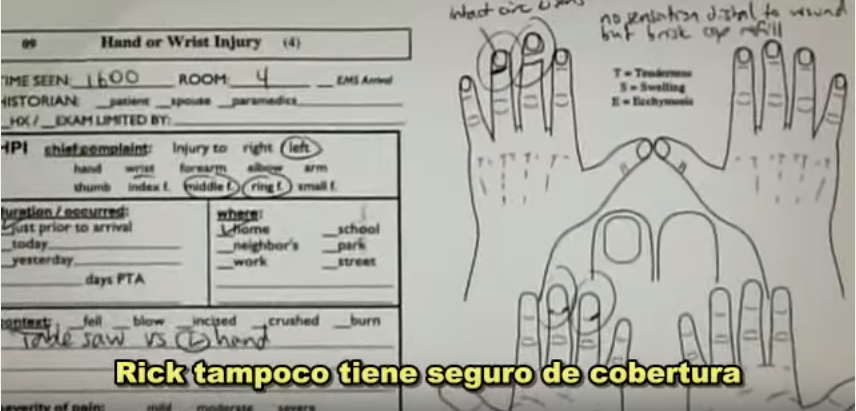
This type of documentary has a mood or atmosphere associated with fiction films but the events may become distorted as a result of the way they are portrayed. These documentary's often show reenactments of events and interviews, they generally don't show the film maker. One film maker that is more famously known for these documentary's is Micheal Moore, a good example of a performative documentary is the film 'sicko' by Micheal Moore, this is about Americans without health insurance, it has reenactments of how they hurt themselves and how some of them sorted out their own injury.
Documentary film making philosophy:
Most people think that all documentary's are believable however this is not the case, film makers can be very clever with how they are filmed and how they can show time in a very clever way. One example of this is Micheal Moor's Bowling for Columbine documentary. Here it shows him going into a bank to open an account the gives you a free gun when you do. He goes in and comes out with a gun however in real time it was a few days after that he was allowed to take the gun but he wore the exact same clothes when he went back to film so it appeared to all be done at the same time.
Wednesday, 9 March 2016
Documentary formal texts:
La sortie des usines Lumière:
This short documentary shows workers leaving a factory, it is a true documentary and is not staged. The camera stays in the same place for the entirety of the film. The fact that there are no cuts in the film makes it more believable as well.
NightMail:
This documentary shows how post is sorted and transported through the royal mail. I know that this documentary is not an accurate representation of the truth as it is all staged throughout. for example the train that you can see on the tracks is in fact a model train shot from above and when they film at the train station the worker is shown pulling the leavers from behind and then it cuts to in front so you know those shots couldn't have been done at the same time.
Bowling for columbine:
This documentary is about the school shooting in columbine, it shows how easy it is to get access to guns in America. This documentary does not lie but it avoids the truth, how it is filmed is very clever as when he goes to open a bank account and get a free gun it appears that he walks in and soon after he leaves with the gun whereas in real life it took a few days but he just whore exactly the same clothes so it appeaser to be all in one day.
When Louis met Jimmy and Louis and the Nazi's:
These documentary's are about the different sides to Jimmy Saville and the 'Skin head'/Nazi culture in the USA, Both documentary's seem to be truthful but some aspects of the Nazi one seem to be pre-planned, although they do not lie they do not seem to tell the entire truth to make it seem worse than it is, however in the Jimmy documentary it seems more truthful purely because of how Jimmy doesn't give away much information and it is purely about how eccentric he is.
The Thin Blue Line:
The Thin Blue Line is about the court case of Randall Adams and whether he killed the police officer or whether it was David Harris that committed the murder. The documentary appears to be truthful as it is an interview, however some of what people say is a lie as there are lots of opposing opinions about who did the crime.
The act of killing:
The act of killing is a documentary about a group of ex gangsters that worked for the government killing communists, they are set a task to reenact what they did when they where younger in whatever way they like. I believe that this is true although some of the scenes that the gangsters film is not true to what they did. The majority of the documentary is true in my opinion especially because through this they realized the true extent of what they did and how bad it was.
Powaqqatsi:
Powaqqatsi is about the movement of people in third world countries because of war. I can't say if it tells the truth or not as there is no dialog and the shots are just of random stuff.
We Are The Lamberth Boys:
This documentary was about the life of teenagers living in Lamberth London, It shows them at school, work and at the youth club. The documentary does not seem to be entirely true of there day to day life as i believe some of it has been staged and they have been told what to talk about.
Subscribe to:
Posts (Atom)